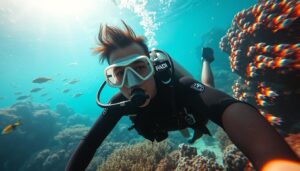





Scuba diving is an exciting adventure. It needs the right gear for a safe and fun dive. As a new diver, having the right diving equipment is key to exploring underwater.
The basics of scuba diving include a tank and regulator for breathing. You also need a BCD and weights for buoyancy, a mask for clear vision, and fins for swimming. Knowing the importance of each equipment helps new divers get ready for their underwater journey.
Key Takeaways
- Understanding the basics of scuba diving equipment is crucial for new divers.
- The right gear ensures a safe and enjoyable diving experience.
- Key equipment includes a tank, regulator, BCD, weights, mask, and fins.
- Each piece of equipment serves a vital function in underwater exploration.
- Proper equipment helps new divers adjust to underwater environments.
Why Quality Dive Gear Matters for Beginners
Getting good dive gear is key for new divers. It makes sure you have a safe and fun time underwater. Knowing what gear you need is very important.
Safety Considerations for New Divers
When you dive, safety comes first. Good dive gear lowers the chance of bad things happening. For example, a regulator keeps your air steady. A mask that fits right keeps water out, so you don’t get scared.
Long-term Investment vs. Rental Equipment
Renting gear is okay for beginners, but buying your own is better in the long run. Having your own gear helps you learn faster. You can find lots of scuba gear online that fits your needs.
| Equipment | Rental | Personal |
|---|---|---|
| Mask | Available | Recommended |
| Regulator | Available | Highly Recommended |
| Fins | Available | Recommended |
Building Your Kit Gradually
You don’t need to buy everything at once. Start with basics like a mask, snorkel, and fins. Then add more as you dive more. This way, you can try different things and find what works for you.
Diving experts say, “The right gear is key to diving safely and happily.” Good dive gear is an investment in your diving adventures. It makes diving safer and more fun.
Essential Gear for Beginner Divers: The Complete Checklist
Starting your scuba diving journey needs the right gear. It’s important for safety, comfort, and fun. Begin with the basics and add more as you go.
The ABC’s of Diving (Mask, Snorkel, Fins)
The first things you need are a mask, snorkel, and fins. A mask that fits right is key. A bad fit can cause trouble underwater.
A snorkel helps you breathe at the surface without effort. Fins help you move underwater. Pick the right type based on where you dive and what you like.
Life Support Equipment (BCD, Regulator, Tank)
Life support gear is crucial for safe diving. A Buoyancy Control Device (BCD) helps you stay at the right depth. This saves energy and makes diving better.
A regulator gives you air at the right pressure. The tank holds the air you breathe. Knowing how these work together is key for safety.
Exposure Protection and Accessories
Exposure protection like wetsuits or drysuits keeps you warm. Choose based on the water and what feels right to you. Extras like dive computers, gloves, and hoods add safety and comfort.
| Equipment | Description | Importance Level |
|---|---|---|
| Mask | Provides clear vision underwater | High |
| Snorkel | Conserves energy while swimming on the surface | Medium |
| Fins | Provides propulsion underwater | High |
| BCD | Controls buoyancy underwater | High |
| Regulator | Delivers air at the correct pressure | High |
| Tank | Holds compressed air for breathing | High |
| Wetsuit/Drysuit | Provides thermal protection | High |
Diving Masks: Finding Your Perfect Fit
Choosing the right diving mask is key for a fun dive. It should fit snugly around your eyes and nose. This makes sure you’re comfortable.
Key Features to Look For in a Quality Mask
When picking a diving mask, think about a few things. Comfort is very important. The mask should not feel too tight on your face.
Visibility matters a lot too. Look for masks with big, clear lenses. Also, the seal should be soft and flexible for a tight fit.
Top Mask Recommendations for Different Face Shapes
Different face shapes need different masks. For flat faces, masks with a thick skirt are best. Round faces might like standard masks.
Try on masks at a dive shop. It helps find the right fit for you.
Proper Care and Maintenance Tips
To keep your mask in good shape, take care of it. Rinse it with fresh water after each dive. Don’t touch the lens to avoid scratches.
Preventing Fogging Issues
Fogging can be a big problem. To stop it, use toothpaste or a defogger on the lens. Rinse it well before diving. This keeps your view clear underwater.
By following these tips, new divers can find a mask that fits well. It should also make diving more enjoyable. Remember, the best diving gear for starters is comfortable and works well.
Selecting the Right Fins for Comfort and Efficiency
For new divers, picking fins that are comfy and efficient is key. Fins help you move around underwater. They are essential diving tools for beginners.
Open-Heel vs. Full-Foot Fins
Choosing between open-heel and full-foot fins depends on the water and what you like. Open-heel fins work in different temperatures and fit with dive boots. Full-foot fins are better for warm water and fit snugly.
Fin Materials and Stiffness Considerations
Fins come in rubber, plastic, and composite materials. The fin’s stiffness affects how well you move and how comfy you are. Softer fins are easier but might not push you as far. Stiffer fins help you move more but can get tiring.
Best Fins for Beginner Divers
Beginners need fins that are comfy and work well. For more tips, check out the Ultimate Spearfishing and Freediving Fin Guide.
Proper Sizing and Fit Guidelines
Fins need to fit right for you to be comfy and move well. Fins that are too big can tire you out. Fins that are too small won’t help you move enough. Try on fins with your dive boots to make sure they fit well.
| Fin Type | Material | Stiffness | Comfort Level |
|---|---|---|---|
| Open-Heel | Composite | Stiff | High |
| Full-Foot | Rubber | Soft | Medium |
| Open-Heel | Plastic | Medium | High |
Fins are key for diving and snorkeling. It’s smart to bring your own fins instead of renting them.
Exposure Protection: Wetsuits, Drysuits and Rashguards
Keeping safe and warm underwater is key. Choosing the right gear is important for new divers. It makes diving more comfortable.
Wetsuit Thickness and Temperature Ratings
Wetsuits are great for keeping warm. They come in different thicknesses. A 3/2 mm wetsuit is good for warmer waters.
A 7 mm or thicker wetsuit is better for cold water. “The right wetsuit thickness is crucial for comfort,” says Mark Thompson.
Think about the water temperature when picking a wetsuit. Wetsuits work by trapping water next to your skin. This water gets warmed by your body.
Wetsuit vs. Drysuit: When to Choose Each
Drysuits are good for cold water. They keep you dry. But, they need skill to use right.
Wetsuits are easier for beginners. But, drysuits are better for cold water. It depends on your diving and what you like.
Recommended Entry-Level Exposure Protection
Wetsuits are best for new divers. They are cheaper and easier to use. Look for the right thickness and material.
Accessories: Hoods, Gloves, and Boots
Other gear helps too. Hoods, gloves, and boots keep you warm. Choose them based on the water temperature.
Good gear makes diving better. As you dive more, you might need different gear. This keeps you comfortable and safe.
Buoyancy Control Devices (BCDs): Your Underwater Life Jacket
For new divers, mastering buoyancy is key. A Buoyancy Control Device (BCD) helps you do this underwater. It lets you adjust your buoyancy to stay at the right depth.
“A good BCD is like a good friend – it helps you navigate the underwater world with confidence,” says a seasoned diver.
Jacket-Style vs. Back-Inflation BCDs
There are two main types of BCDs: Jacket-Style and Back-Inflation. Jacket-Style BCDs are great for beginners. They are comfy and easy to use.
Back-Inflation BCDs have a sleek design. They are better for advanced divers or those who like a slim profile underwater. Your choice depends on your diving style.

Essential Features for Beginners
Beginners should look for these features in a BCD:
- A comfortable fit with adjustable straps
- Sufficient lift capacity
- Integrated weight pockets for easy weight management
- A durable, high-quality material that can withstand regular use
Top BCD Recommendations for New Divers
Some top BCDs for beginners come from well-known brands. They offer quality, comfort, and good prices. Look at fit, features, and brand reputation when choosing.
Proper Sizing and Adjustment
Getting the right size and adjusting your BCD is very important. Try on different sizes and adjust the straps for a snug fit.
As
“The right BCD can make all the difference in your diving experience, providing both safety and comfort,”
notes a diving expert. The right size and adjustment will make your dives better.
Regulators and Breathing Systems
A regulator is very important for divers. It gives them air from the tank. Beginners need to know how regulators work and what makes a good one.
Understanding Regulator Components
A regulator has parts like the first stage, second stage, and alternate air source. The first stage makes the tank’s high pressure lower. The second stage makes it even lower, so you can breathe easily. The alternate air source, or octopus, is for emergency air.
Key Features for Cold and Warm Water Diving
Regulators are made for different water temperatures. For cold water diving, you need one that won’t freeze. In warm water, it’s about breathing easily.
Maintenance and Care Requirements
Keeping your regulator in good shape is key. Rinse it with fresh water after each dive. Store it in a dry, cool spot. Get it checked by a pro every year. This keeps it working right and safe for diving.
| Regulator Feature | Cold Water Diving | Warm Water Diving |
|---|---|---|
| First Stage Design | Balanced, freeze-resistant | Standard, compact design |
| Breathing Ease | High performance | Easy breathing |
| Maintenance Needs | Regular, thorough servicing | Regular rinsing and servicing |
When picking a regulator, think about where you’ll dive. A good quality one makes diving safer and more fun.
Dive Computers and Safety Equipment
As new divers start their journey, they learn about dive computers and safety gear. These tools are must-have scuba gear for new divers. They make diving safer and more fun.
Why Every New Diver Needs a Computer
Dive computers track dive time, depth, and how fast you go up. They help avoid sickness from deep dives. They give you data in real time, so you can make smart choices underwater.
Entry-Level vs. Advanced Features
New divers need to know about basic and advanced dive computers. Basic ones have the basics. Advanced ones have more, like tracking air and settings you can change.
Surface Marker Buoys and Signaling Devices
Along with computers, SMBs and signaling devices are key. SMBs show where you are to your team on the surface. Signaling devices help in emergencies to get help.
Top Dive Computer Options for Beginners
Choosing the right dive computer can be hard for beginners. Look for ones that are easy to use, work well, and don’t cost too much. Cressi, Mares, and Scubapro have good choices.
Getting a dive computer and safety gear is a big step for new divers. These tools make diving safer and more fun.
Conclusion: Taking the Plunge with Confidence
We’ve talked about the beginner diving gear essentials you need. Now, you can start building your diving kit. It’s important to have the right gear for a safe and fun dive.
The gear we’ve discussed is a good start for new divers. You’ll need masks, fins, BCDs, regulators, and dive computers. As you dive more, you can add to your kit and get better gear.
There are also other diving gear items that can make your dives better. Things like surface marker buoys and signaling devices can add safety and comfort.
By getting the right beginner diving gear essentials, you’ll dive with confidence. You’ll enjoy the underwater world more, no matter if it’s warm or cold.