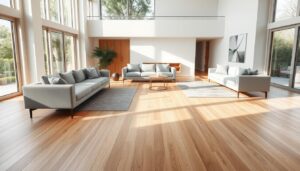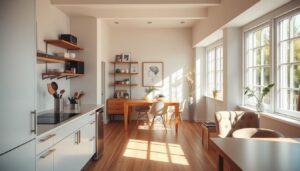



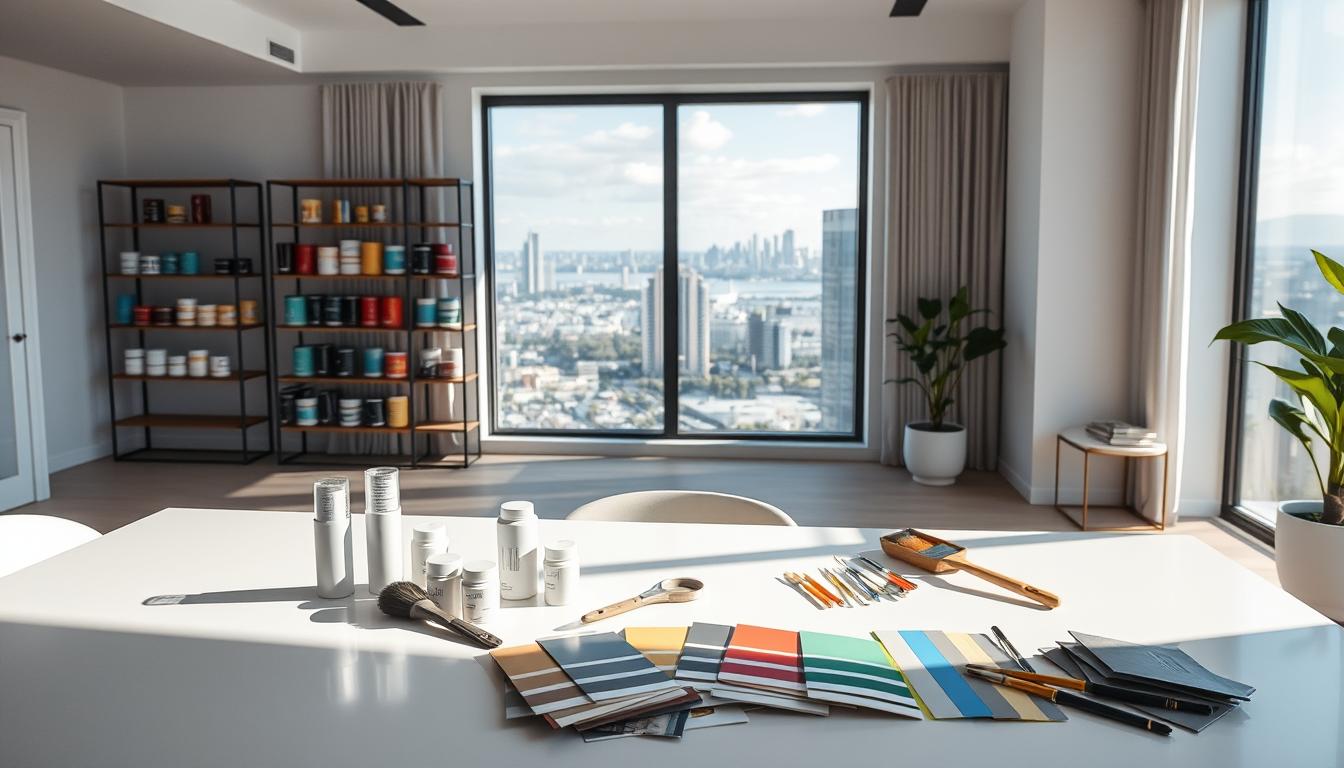
Choosing the right paint colors for your home can be hard. There are so many options out there.
Many homeowners find it tough to coordinate colors across different rooms. They want everything to look good together.
With the right help, you can pick the best colors for your home. This article will give you home painting tips. It will also share interior design color selection strategies.
Key Takeaways
- Understanding the basics of color theory
- Exploring different paint color options
- Coordinating colors across multiple rooms
- Considering the impact of lighting on paint colors
- Using color to enhance your home’s aesthetic
Understanding Color Theory Basics
Color theory is key for picking the right paint colors for your home. It helps us mix colors that look good together. Knowing color theory lets you choose paint colors wisely.
The Color Wheel Explained
The color wheel shows how colors are connected. It’s a circle with primary colors in the middle.
Understanding Complementary Colors
Complementary colors are pairs that are opposite each other on the color wheel. For example, blue and orange, or red and green. These colors make a room look nice and interesting.
Working with Analogous Colors
Analogous colors are three colors next to each other on the color wheel. Like blue, green, and yellow-green. These colors make a room feel calm and nice.
Primary, Secondary, and Tertiary Colors
Primary colors are red, blue, and yellow. Secondary colors are green (blue + yellow), purple (red + blue), and orange (red + yellow). Tertiary colors mix a primary color with a secondary color, like blue-green.
| Color Type | Colors | Description |
|---|---|---|
| Primary | Red, Blue, Yellow | Basic colors that cannot be created by mixing other colors. |
| Secondary | Green, Purple, Orange | Colors created by mixing two primary colors. |
| Tertiary | Blue-green, Red-orange, etc. | Colors made by mixing a primary color with a secondary color. |
Warm vs. Cool Colors and Their Effects
Warm colors like red, orange, and yellow feel warm and energetic. Cool colors like blue, green, and purple are calming. Choose based on the mood you want in a room.
Assessing Your Space Before Selecting Paint
To find the perfect paint color, you must know your space well. You need to take a few steps to choose the right wall paint hues.
Measuring Your Room Dimensions
Getting the right paint amount starts with measuring your room. Measure the length, width, and height. This helps figure out how much paint you’ll need.
Identifying Architectural Features Worth Highlighting
Every room has special features that can be made more beautiful with paint. Look for things like built-in shelves or crown molding. Choosing the right paint color can make these features stand out.
Considering Room Function and Traffic Flow
The room’s purpose and how much people use it matter when picking paint. Busy areas need paint that’s easy to clean. Bedrooms should have colors that help you relax.
| Room Type | Considerations | Best Paint Colors |
|---|---|---|
| High-Traffic Areas | Dense traffic, durability | Neutral tones |
| Bedrooms | Relaxation, calmness | Soft pastels, muted colors |
| Living Rooms | Socializing, entertainment | Warm, inviting colors |
Thinking about these things helps you pick the best paint colors. This way, your home will look great and be functional.
How to Choose the Right Paint Colors for Your Home
Choosing paint colors can be hard with so many options. You need to think about what you like and how it will look together. The right colors make your home feel welcoming and nice.
Starting With Your Personal Preferences and Style
Start by thinking about what you like and the style you want for your home. Look at the colors you like and how they make you feel. This helps make your home feel like it’s yours.
Creating a Cohesive Color Flow Between Rooms
Having the same colors in different rooms makes your home feel connected. Think about the colors you want in each room. Using the same color or a similar shade helps rooms look like they belong together.
Building Around Existing Furniture and Décor
When picking paint colors, think about your furniture and decorations. This includes things you can move and things you can’t.
Working with Fixed Elements
Things like built-in cabinets or floors are important when choosing colors. They can help guide your color choices.
Coordinating with Movable Pieces
Furniture and decorations you can move also matter. Think about how these items will look with your wall colors. This helps make everything look good together.
By thinking about what you like, how rooms connect, and your furniture, you can pick the best paint colors. These colors will make your home look great and show off your style.
The Impact of Lighting on Paint Colors
Lighting greatly changes how we see paint colors. It’s very important in home decorating. Both natural and artificial lights affect color perception.
Natural vs. Artificial Light Sources
Natural light changes with the day, affecting color. Artificial light stays the same but can change colors. Knowing how these lights work is key to picking the right paint colors.
How Light Direction Affects Color Perception
The way light hits a wall changes color perception. Direct sunlight makes colors pop, while indirect light softens them. This is important for home painting tips.
Testing Colors at Different Times of Day
Testing paint colors at various times is crucial. It shows how colors change under different lights.
Morning Light Considerations
Morning light is cooler and makes colors seem more calm. It’s a good time to see how colors look during the day.
Evening Light Adjustments
Evening light is warmer and makes colors seem more alive. Changing your color choice based on this can make your home look more vibrant.
Understanding lighting effects helps homeowners pick the best paint colors. This makes their home look better through color psychology in home decorating.
Working With Existing Elements in Your Home
To make your home look good, it’s key to match your paint colors with what you already have. Think about your floors, fixtures, and more. This helps create a look that feels right.
Coordinating With Flooring Materials
Your floors help decide your home’s color scheme. Dark floors need light paint to balance. Light floors can handle bolder colors.
| Flooring Material | Suggested Paint Color |
|---|---|
| Dark Hardwood | Light to Medium Shades |
| Light Hardwood | Bold or Dark Shades |
| Tile or Stone | Complementary Earth Tones |
Complementing Permanent Fixtures and Hardware
Things like kitchen cabinets and door handles matter a lot. Pick a paint color that goes well with them. For example, cool paint colors look good with stainless steel.
“The right paint color can make or break the ambiance of a room. It’s all about finding a balance between your walls and the existing elements.”
Balancing With Trim, Ceiling, and Molding Colors
Trim, ceiling, and molding colors should match or contrast with your walls. Use a lighter shade for trim and molding for a clean look. Light ceiling colors make rooms feel bigger. Darker shades make them cozier.
Think about these elements and pick paint colors that match them. This way, your home will show off your style.
Color Psychology: Emotional Impact of Different Hues
Color psychology is key in home decorating. It changes how we feel in different spaces. The right colors can make a room feel better, affecting our mood and energy.
When selecting interior paint colors, think about how colors make us feel.
Calming Colors for Bedrooms and Relaxation Spaces
Bedrooms and calm areas do well with soft blues, pale greens, and gentle lavenders. These colors help us relax and sleep better. They make our minds and bodies feel calm.
Energizing Colors for Active Areas and Home Offices
But, for busy spots and offices, use colors like vibrant oranges, bright yellows, and reds. These colors make us feel more awake and creative. They help us work better.
Appetite-Affecting Colors for Kitchens and Dining Spaces
In kitchens and dining areas, colors can make us hungrier. Warm colors like terracotta, golden brown, and deep reds do this. They also make the space feel cozy.
Focus-Enhancing Colors for Study Areas
Study areas and libraries need colors that help us focus. Use colors like concentrated blues, muted greens, and neutral grays. These colors clear our minds and help us stay focused.
Knowing how colors affect us helps us pick the right ones. This makes our homes better places to live.
- Soft blues and pale greens for calming effects
- Vibrant oranges and yellows for energy boosts
- Warm reds and terracotta for stimulating appetite
- Concentrated blues and muted greens for improved focus
Keeping up with paint color trends for houses helps us pick colors that look good and feel good.
Testing Paint Colors Effectively
Testing paint colors is more than just swatching. It needs a careful plan for the best results. When picking choosing wall paint hues, think about lighting and your current decor.
Using Paint Samples and Swatches Strategically
Get paint samples or swatches from your local store. These let you see how colors look on your walls. It’s a smart home painting tip to test many colors at once.
Creating Test Patches on Different Wall Sections
Put the paint samples on different wall parts. Choose areas with different light levels. See how colors change at different times.
Digital Tools and Apps for Visualizing Paint Colors
For a new way to pick interior design color selection, try digital tools and apps. They let you see paint colors on your walls without samples.
Popular Color Visualization Apps
- ColorSnap by Sherwin-Williams
- Paint My Wall by Dulux
Virtual Room Painters
Some apps let you upload your room photo and change colors virtually. It’s a fun way to test colors.
| Method | Advantages | Disadvantages |
|---|---|---|
| Physical Samples | Accurate color representation | Limited to available samples |
| Digital Tools | Convenient, wide color range | May not perfectly match real paint |
Popular Color Schemes for Home Interiors
Choosing the right color scheme for your home is key. It changes how your rooms feel and look. The right colors can make your home look bigger and feel cozier.
There are many color schemes to pick from. Let’s look at some popular ones:
Monochromatic Color Schemes for Elegant Spaces
A monochromatic scheme uses different shades of one color. It makes your home look elegant and simple. It’s great for those who like a calm and classy look.
- Creates a cohesive look
- Can make a room appear larger
- Ideal for minimalist designs
Complementary Color Pairings for Dynamic Rooms
Complementary colors are opposite each other on the color wheel. They add energy and interest to your rooms. They make your space lively and engaging.
- Creates visual contrast
- Can make a room more engaging
- Ideal for spaces that need a lively atmosphere
Analogous Color Combinations for Harmonious Flow
Analogous colors are next to each other on the color wheel. They blend smoothly, creating a calm and cohesive look. It’s perfect for bedrooms and living rooms.
- Creates a harmonious flow
- Can enhance the sense of calm
- Ideal for bedrooms and living rooms
Neutral Palettes With Strategic Accent Colors
Neutral colors are versatile and easy to work with. Adding accent colors brings personality and style. It’s great for those who like to change things up often.
- Provides flexibility
- Allows for easy updates with accent colors
- Ideal for those who like to change decor frequently
By using these color schemes, you can make your home look and feel better. Whether you like elegance, energy, harmony, or versatility, there’s a scheme for you.
Current Paint Color Trends for Modern Homes
Modern homes are now using new paint color trends. These trends show off personal style and make homes feel better. Paint color is key in setting the mood and look of a home.
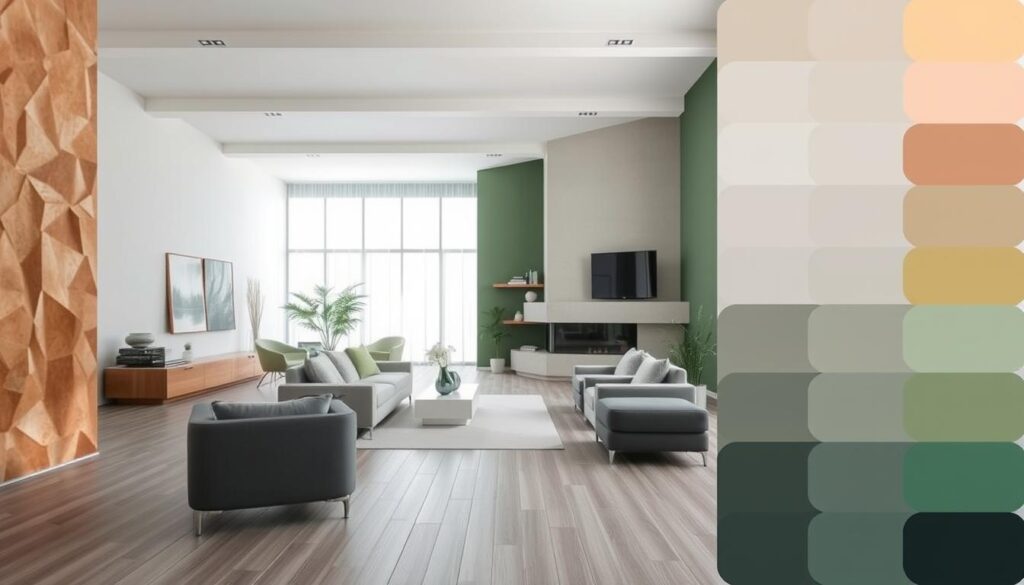
2023-2024 Trending Interior Colors
The latest colors for 2023-2024 mix soft and bold shades. Earth tones like terracotta and sienna are popular. So are calming blues and greens that help you relax.
Vibrant colors like coral and emerald green are used for bold touches. They can be on accent walls or in decorations.
Timeless Colors That Never Go Out of Style
Some colors stay popular forever. White, beige, and gray are favorites in modern homes. They match many decorating styles and let artwork and furniture stand out.
Regional Color Preferences Across the United States
Color trends vary by region. In warm places like California and Florida, light colors are chosen. They help keep homes cool and bright.
In cooler areas like the Northeast, warmer colors are favored. They make homes feel cozy and inviting.
Sustainable and Eco-Friendly Color Choices
More people want eco-friendly paint now. Low-VOC and zero-VOC paints are getting popular. They clean the air and are better for health.
When to Consult Color Professionals
Choosing the right paint colors can be hard. Sometimes, it’s best to get help from color experts. They can save you time and avoid mistakes.
Benefits of Working With Interior Designers
Interior designers know a lot about interior design color selection. They help pick colors that match your style and make your home better. They offer many options and advice for a unified look.
Color Consultations at Paint Retailers
Many paint stores offer free or cheap color advice. These experts help pick choosing wall paint hues that go well with your home. They use special software to show you colors.
Online Color Consultation Services
Online color advice is now easy to get. You can send photos and get color tips. It’s a good way to get help without leaving home.
Cost Considerations for Professional Help
Getting color advice can cost money. Here’s what you might pay for different services:
| Service | Typical Cost |
|---|---|
| Interior Designer | $100-$500 |
| Paint Retailer Color Consultation | Free-$100 |
| Online Color Consultation | $20-$200 |
Knowing the costs helps you decide when to get expert advice. This way, you can make the best choice for your painting project.
Conclusion
Choosing the right paint colors for your home is complex. It involves color theory, understanding your space, and lighting. Testing colors is also key.
Color psychology is important in home decorating. Different colors can make you feel different ways. For example, blues and greens calm you, while yellows and oranges energize you.
To paint well, test colors first. Think about the light in your home and match paint with your floors and trim. This way, you’ll get a space that looks and feels great.