Introduction
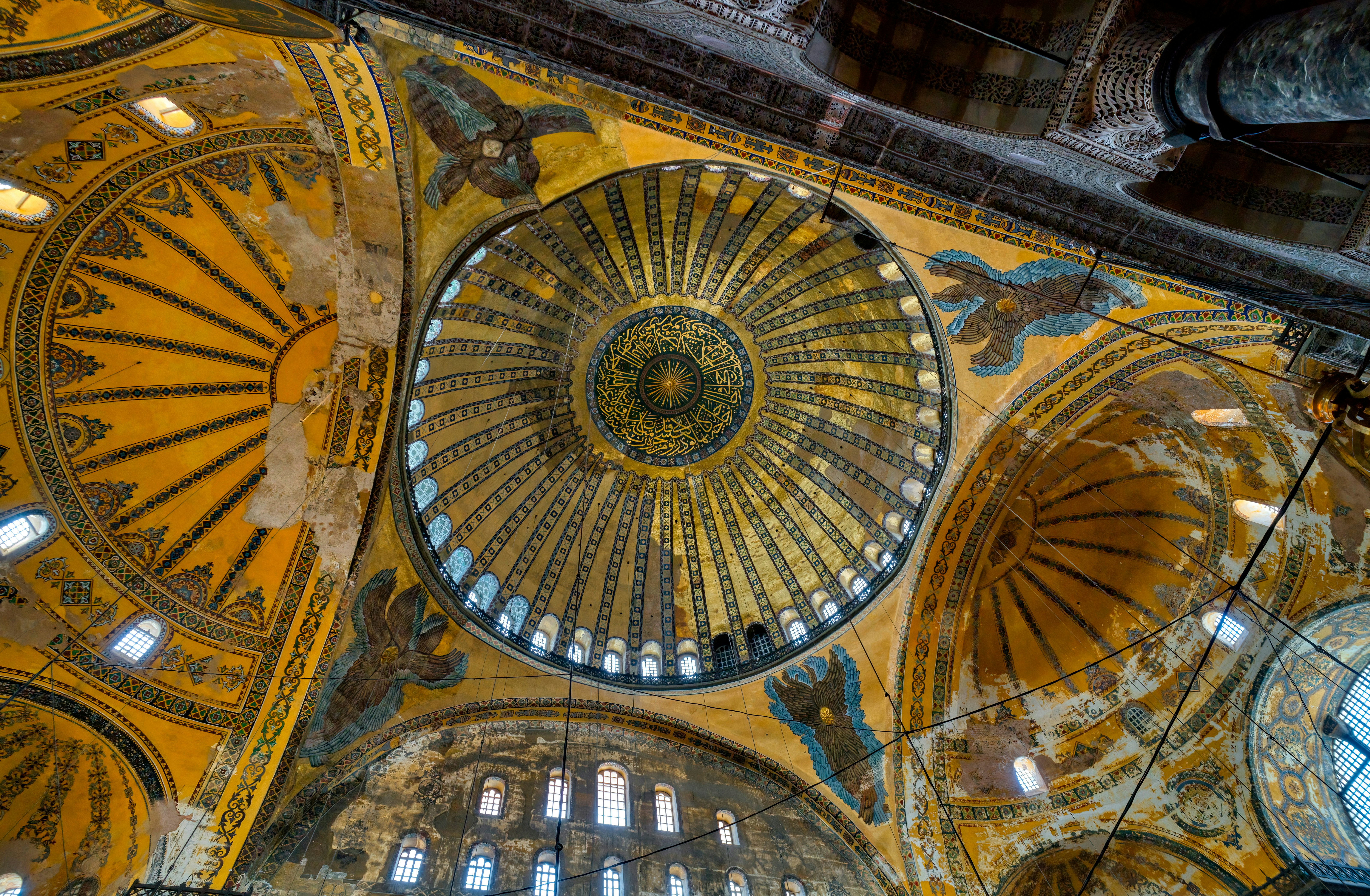
Hagia Sophia isn’t just another landmark on an Istanbul sightseeing list. It’s one of the most historically layered buildings on the planet, having served as a Byzantine cathedral, an Ottoman mosque, a secular museum, and now a mosque once again. This isn’t a building you can glance at and move on. The history of Hagia Sophia touches on the rise and fall of empires, shifts in religious power, and architectural feats that still impress nearly 1,500 years later.
If you’re planning a trip to Istanbul, this article is for you. I’ll walk you through exactly what to expect, the key historical phases you’ll see reflected inside, common mistakes first-time visitors make, and how to get the most out of your time there. No fluff—just practical details that will make your visit better.

A Quick Note: Hagia Sophia’s Current Status in 2025
Let’s get the most immediate question out of the way. In 2020, Hagia Sophia was officially reconverted from a museum back into a mosque. This change still shapes the visitor experience in 2025. The building is open to tourists, but it’s no longer free to enter—you’ll pay an entry fee.
The good news is that the major mosaics and overall structure remain visible. The upper gallery, where some of the best-preserved Byzantine mosaics are located, is still accessible. But you need to plan around prayer times. During the five daily prayers, visitor access is restricted, and parts of the ground floor are cordoned off. The building also closes for about 30 minutes at the start of each prayer. Friday afternoons, especially around noon, are the busiest. Go early in the morning or late in the afternoon for the smoothest experience.
Knowing this upfront saves you from showing up at the wrong time and losing half your day waiting.
Why Does Hagia Sophia’s History Matter for Your Visit?
Here’s the truth: without some context, Hagia Sophia is just a big, dimly lit building with a massive dome. Walk in cold, and you’ll see crowds, scaffolding, and a lot of marble. But if you understand what you’re looking at, every corner tells a story.
That history is visible in layers. Those faded mosaics high on the walls are remnants of the Byzantine Christian era. The massive calligraphy medallions hanging from the ceiling belong to the Ottoman period. The marble floors you walk on have been worn smooth by millions of feet over centuries. The building isn’t static—it evolved, and that evolution is what makes it extraordinary.
When you recognize the pendentives under the dome (the triangular supports that make the dome possible) or spot where plaster was removed to reveal a mosaic, you stop being a casual tourist. You become someone who understands why this building matters. That shift alone is worth the 20 minutes it takes to read about the history before you go. For deeper context, travelers can pick up a concise history of Hagia Sophia to bring along.
The Easy Timeline: Three Major Eras at a Glance
Here’s the quick version. Three main phases define Hagia Sophia’s life:
- Byzantine Cathedral (537–1453): Built by Emperor Justinian I. It was the largest cathedral in the world for nearly 1,000 years. This is where the architecture and original mosaics come from.
- Ottoman Mosque (1453–1935): After the Ottoman conquest of Constantinople, Sultan Mehmed II converted it into a mosque. This added the minarets, mihrab, minbar, and the enormous calligraphy disks.
- Secular Museum (1935–2020): Under Atatürk, it became a museum accessible to everyone. Major restoration work uncovered many Byzantine mosaics that had been plastered over.
- Current Hybrid (2020–present): It’s a mosque again, but tourists can still visit outside prayer times. An entry fee applies, and the upper gallery remains open.
That’s the backbone. The rest of this article fills in the details that make those periods come alive inside the building.
Phase 1: The Byzantine Cathedral — Justinian’s Masterpiece
Emperor Justinian I didn’t do things small. After the Nika riots destroyed the previous church in 532 AD, he commissioned a replacement that would outdo anything that came before. Construction took just under six years—an astonishingly short time for a project of this scale. It was completed in 537 AD.
What made it revolutionary was the dome. At the time, building a dome of that size (about 31 meters in diameter) over a rectangular space was a structural nightmare. The architects solved it with pendentives—curved triangular supports that transferred the dome’s weight to four massive piers. This was a genuinely new engineering idea, and it worked. The dome still stands today.
Inside, materials were brought from across the Byzantine Empire: marble columns from Ephesus, porphyry from Egypt, and rare stone from Syria. These weren’t just decorative. They were political statements, saying “Rome has a new capital, and it’s here.”
In practical terms, when you walk in, look at the marble on the lower walls and the columns on the ground floor. Some are nearly 1,500 years old. The floor itself, worn and uneven in places, has been underfoot for the entire history of the building. The mosaics that survive from this period are mostly in the upper gallery, including the stunning Deesis mosaic, which we’ll get to later.
Phase 2: The Mosque — Minarets, Mihrabs, and Calligraphy
When the Ottomans conquered Constantinople in 1453, Sultan Mehmed II immediately converted Hagia Sophia into a mosque. He didn’t tear it down. He adapted it. That decision preserved the building for the next half-millennium.
The first minaret was wooden and didn’t survive. The four stone minarets you see today were added gradually by different sultans. They’re not identical, and if you look closely, you can spot differences in height and design. That’s a testament to the building’s organic evolution.
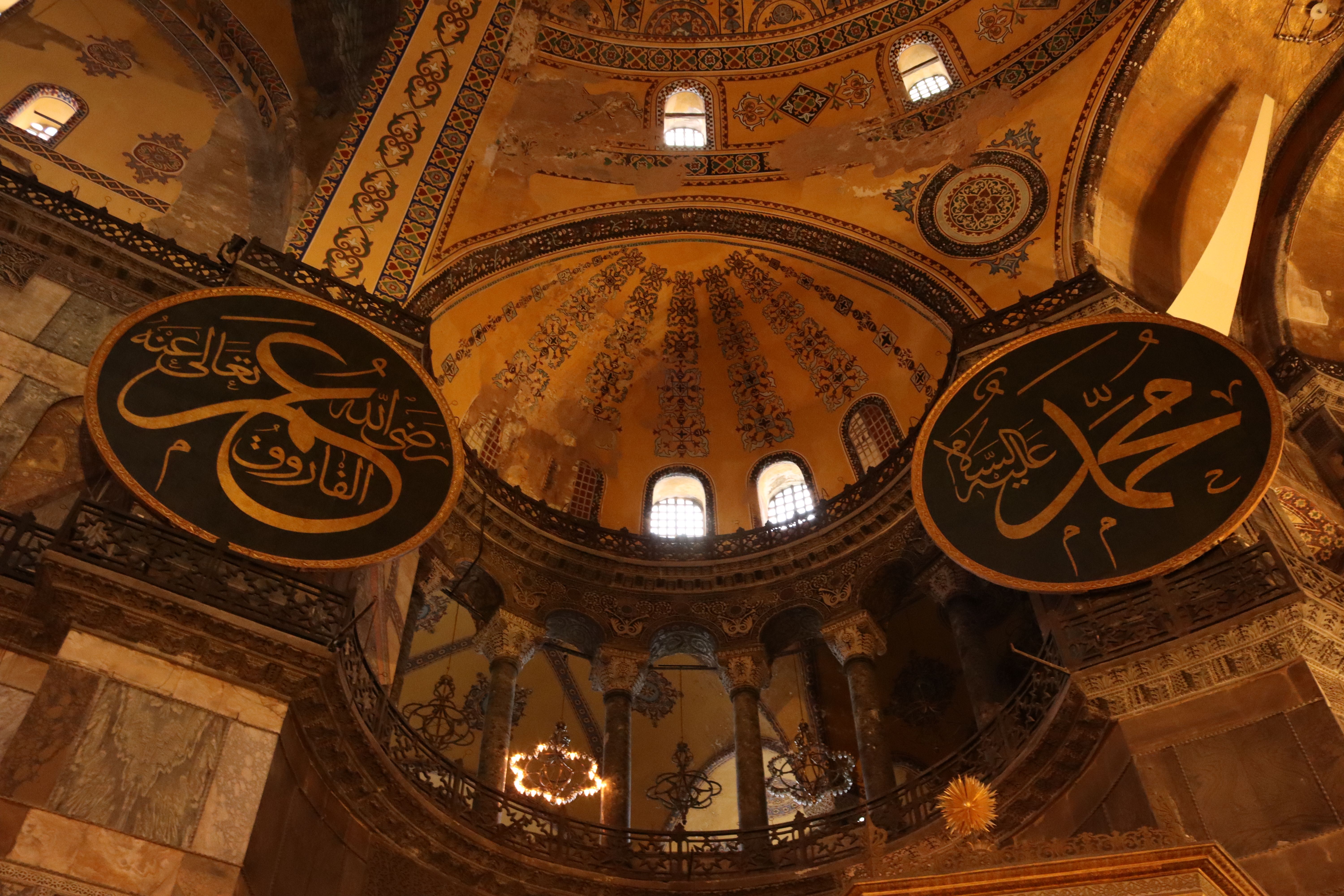
Inside, the Ottomans added a mihrab (the niche indicating the direction of Mecca) and a minbar (the pulpit). They also installed the enormous round medallions with calligraphy that now hang high on the piers. Those medallions are not just decorative. They’re some of the finest examples of Islamic calligraphy you’ll see anywhere, with the names of Allah, the Prophet Muhammad, and the first caliphs inscribed in gold on dark backgrounds.
Here’s the practical tip: look for where the mosaics peek through. The Ottomans plastered over the Byzantine mosaics instead of destroying them—partly practical (plaster is cheap and easy) and partly respectful (covering Christian imagery without removing it entirely). That plaster later allowed restorers to uncover many mosaics in the 20th century. In the upper gallery, you can see where the plaster stops and the mosaics begin. It’s a literal line between two eras of history.

Phase 3: The Museum — Secularization and Restoration
In 1935, under Mustafa Kemal Atatürk’s government, Hagia Sophia was secularized and turned into a museum. This was a deliberate move to create a symbol of cultural harmony in the new Turkish Republic. For the first time, anyone could enter regardless of religion.
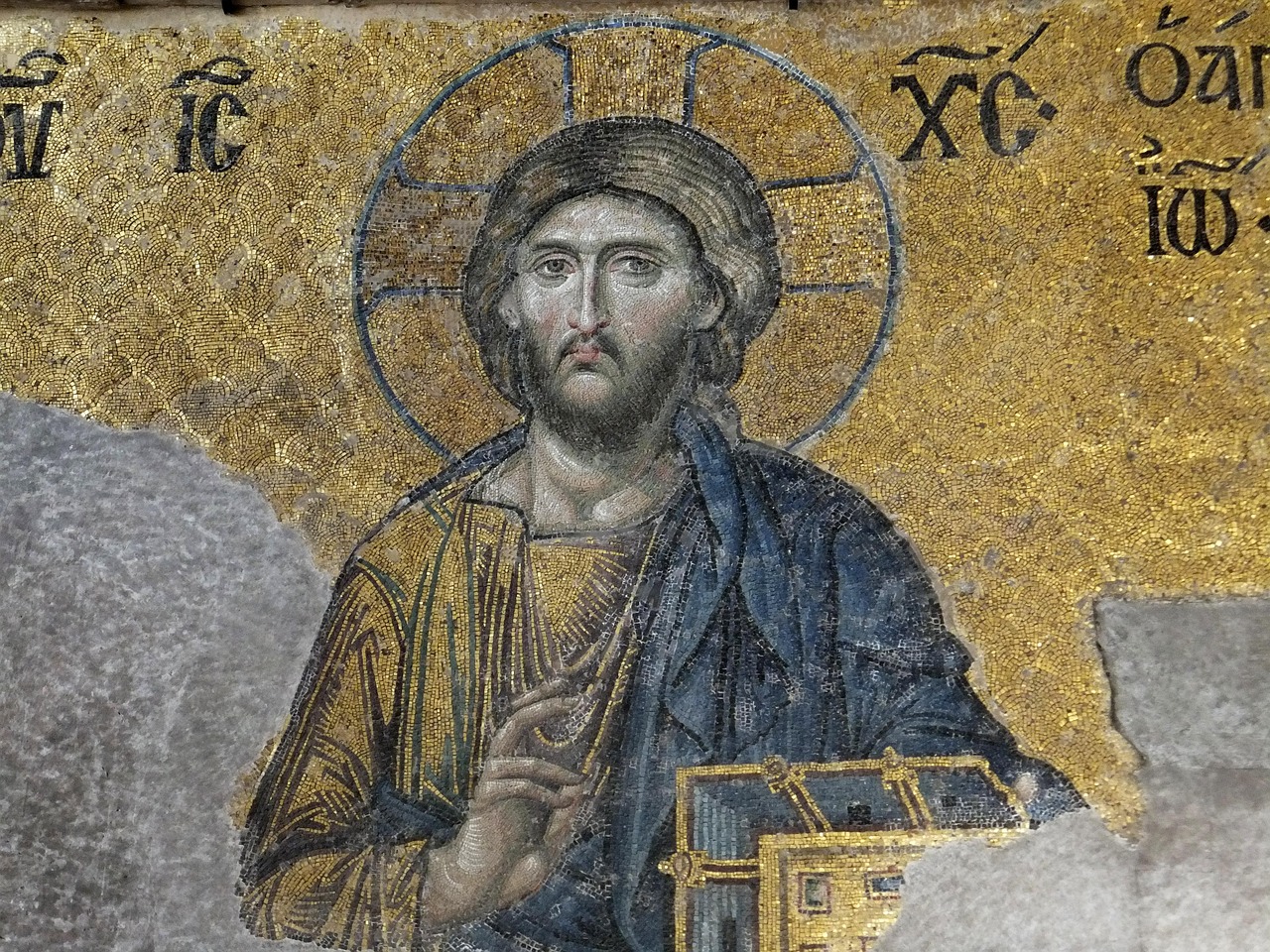
The museum era was also a time of serious restoration. Byzantine mosaics that had been hidden under plaster for centuries were carefully uncovered. The most famous of these is the Deesis mosaic in the upper gallery, which dates from the 13th century. It depicts Christ flanked by the Virgin Mary and John the Baptist, and the level of detail is stunning. The faces have a humanity that feels almost modern.
Other mosaics from this period include the imperial portraits in the south gallery, showing Emperor Constantine IX Monomachos and Empress Zoe. These were also uncovered during the museum years.
If you’re reading older guidebooks or tour itineraries, many still reflect this museum era. That can be confusing now that the building has changed status again. But the key point is that the mosaics survived, and you can still see them.
Phase 4: The Current Hybrid — What It Means for Tourists in 2025
Since 2020, Hagia Sophia has functioned as a mosque again. But it’s not a simple return to 1453. It’s a hybrid—a place of worship for Muslims and a tourist attraction for everyone else.
Here’s what that means for you in practical terms:
- Entry fee: Approximately 25 Euros for foreign visitors as of late 2024/early 2025. This is subject to change, but budget for it.
- Separate entrances: Worshippers use one entrance near the ablution area. Tourists typically enter through the main doors, but you’ll be directed to the tourist lane.
- Prayer time restrictions: During the five daily prayers, visitor access is limited. You can still enter the building, but parts of the ground floor are closed, and you can’t walk around freely. The upper gallery remains open during prayers. Times change daily, so check online before you go.
- Clothing rules: Modest dress is required inside a functioning mosque. Women should cover their heads and shoulders. Men should cover their knees. Shoes are removed at the entrance. Bring a scarf and plan accordingly.
- Crowds: Fridays at noon are chaos. Sunday mornings are also busy. Go early (right at opening) or late (after 4 PM) for smaller crowds.
The biggest surprise for most tourists is the fee. Many assume it’s still free because it was a museum for so long. It’s not. Plan your budget accordingly.
What to See Inside: The Must-See Highlights
You need at least two hours inside. Here’s what to prioritize:
- The Great Dome: Stand directly under the center. Look up. The 40 ribs radiate out from the center. The light filtering through the windows at the base makes the dome look like it’s floating. That’s not an accident—the architects designed it that way.
- The Deesis Mosaic: Located in the upper gallery, this is the most famous mosaic in the building. It dates from the 13th century and shows Christ Pantocrator with Mary and John the Baptist. The expressions are remarkably human. It’s worth the climb.
- The Weeping Column: On the ground floor, near the northwest aisle. This marble column has a hole in it. Legend says that touching it cures ailments. It’s always crowded, so go early if you want to try it.
- The Marble Doors: These massive bronze and marble doors near the south entrance are original from the 6th century. They’re a reminder of the building’s original opulence.
- The Imperial Gate: The main door into the nave. The mosaics above it show Christ enthroned. It’s one of the few surviving images from the Byzantine era that isn’t in the upper gallery.
- The Calligraphy Medallions: The eight giant round disks hanging from the piers. These are 19th-century additions but masterpieces of Islamic calligraphy. They’re massive—about 7.5 meters in diameter.
- The Upper Gallery: This is where most of the best mosaics are located, including the Deesis. The walk up is a bit steep, but it’s worth it for the view and the art.
Don’t try to see everything in 30 minutes. You’ll miss the details. Take your time in the upper gallery especially.
Common Mistakes Tourists Make (And How to Avoid Them)
I’ve seen these mistakes countless times. Don’t make them.
- Not checking prayer times: Show up during Friday prayers, and you’ll be waiting outside for over an hour. Check the daily prayer schedule before you go. Avoid Friday noon entirely.
- Inappropriate clothing: Hagia Sophia is a mosque. Shorts, tank tops, and uncovered shoulders will get you turned away. Bring a scarf. It’s not optional. If you need one, a lightweight travel scarf works well for covering your head and shoulders.
- Not pre-booking a guide or audio guide: You can walk around on your own, but without context, the building loses most of its meaning. A good guide connects the history to what you’re seeing. An audio guide is the budget-friendly alternative.
- Confusing it with the Blue Mosque: They’re right next to each other, but they’re not the same. The Blue Mosque is newer (early 1600s), free, and still an active mosque. Hagia Sophia is older, costs money, and has the deeper history. Visit both, but plan for two separate experiences.
- Rushing through in 30 minutes: You’ll see the dome, snap a photo, and miss everything else. Budget at least two hours. The upper gallery alone takes 45 minutes to see properly.
These are small adjustments that make a big difference.
Booking Your Visit: Tickets, Tours, and Timing
Here’s the straightforward path to a good visit in 2025.
Entry tickets cost roughly 25 Euros for foreign visitors. You can buy them at the gate, but the queue is long and slow. Pre-booking online through the official ticket platform saves 30 to 60 minutes of standing in line. Many visitors find that worth the small extra fee.
If you want full context, a guided tour is the better option. Expect to pay between 40 and 50 Euros for a skip-the-line guided tour that includes entry and a licensed guide. The tour typically lasts about 2.5 hours. Given what you learn, it’s money well spent. Without a guide, you lose the narrative thread that makes the building come alive.
Booking at least three days in advance is a good rule during summer. In peak season (June through September), a week is safer. For a reliable guided tour, I recommend checking this one from GetYourGuide. It consistently gets positive reviews and includes skip-the-line access that saves the most time.
Alternatively, the Istanbul Museum Pass includes Hagia Sophia entry. If you’re visiting multiple museums in Istanbul (like Topkapi Palace and the Basilica Cistern), the pass pays for itself. Check the current price before you go, as it changes.
Hagia Sophia vs. The Blue Mosque: Which Should You Prioritize?
If you’re short on time, this is a common dilemma. Here’s the breakdown.
Hagia Sophia: Older (1,500 years), richer historical layers, more unique architecture, more mosaics. It’s also more expensive (25 Euros) and more crowded. Plan for one to two hours minimum.
The Blue Mosque: Newer (early 1600s), still an active mosque, free entry, less crowded overall. It’s beautiful, but it doesn’t have the same depth of history. The interior is mostly tiled in blue Iznik tiles (hence the name), and the six minarets are iconic. Plan for 30 to 45 minutes.
My recommendation: visit Hagia Sophia first. It’s the one-of-a-kind building. Then walk across the square to the Blue Mosque for a free, quieter experience. You can see both in a single morning if you start early.
What to Bring for a Comfortable Visit
Practical preparation makes the experience better. Here’s what to pack in your day bag:
- Comfortable shoes: You’ll be walking on marble floors for at least two hours. The marble is hard, and your feet will thank you for proper footwear. If you need a good pair, comfortable walking shoes make a noticeable difference on a long visit.
- A scarf: For covering your shoulders and head. Women absolutely need this. Men should have a jacket or shirt with sleeves.
- A water bottle: It gets warm inside with all the people. Stay hydrated.
- A camera with good low-light capabilities: The interior is dim, especially on cloudy days. Most phone cameras handle this fine, but if you have a dedicated camera, bring one with a wide aperture. This compact model from Sony is a solid choice for travel photography in indoor spaces.
Bags are searched at the entrance, so pack light. A small cross-body bag or a daypack is enough.

Final Thoughts: Is Hagia Sophia Worth the Hype?
Yes, it is worth the hype. But only if you go prepared.
The history is genuinely unmatched. No other building on earth has served as a cathedral, mosque, museum, and mosque again over 1,500 years. The architecture is breathtaking. The mosaics are world-class.
But the visitor experience has tradeoffs. It’s more expensive than it was. It’s crowded. You have to navigate prayer times. Without planning, it can feel like a hassle.
Go with context. Book your ticket or tour in advance. Wear appropriate clothing. Give yourself enough time. Then walk inside and understand why this building has fascinated people for centuries.
Book your tour or ticket now to secure your spot. The best slots sell out fast, especially in summer. Don’t let bad planning ruin what could be a highlight of your trip to Istanbul.