Introduction
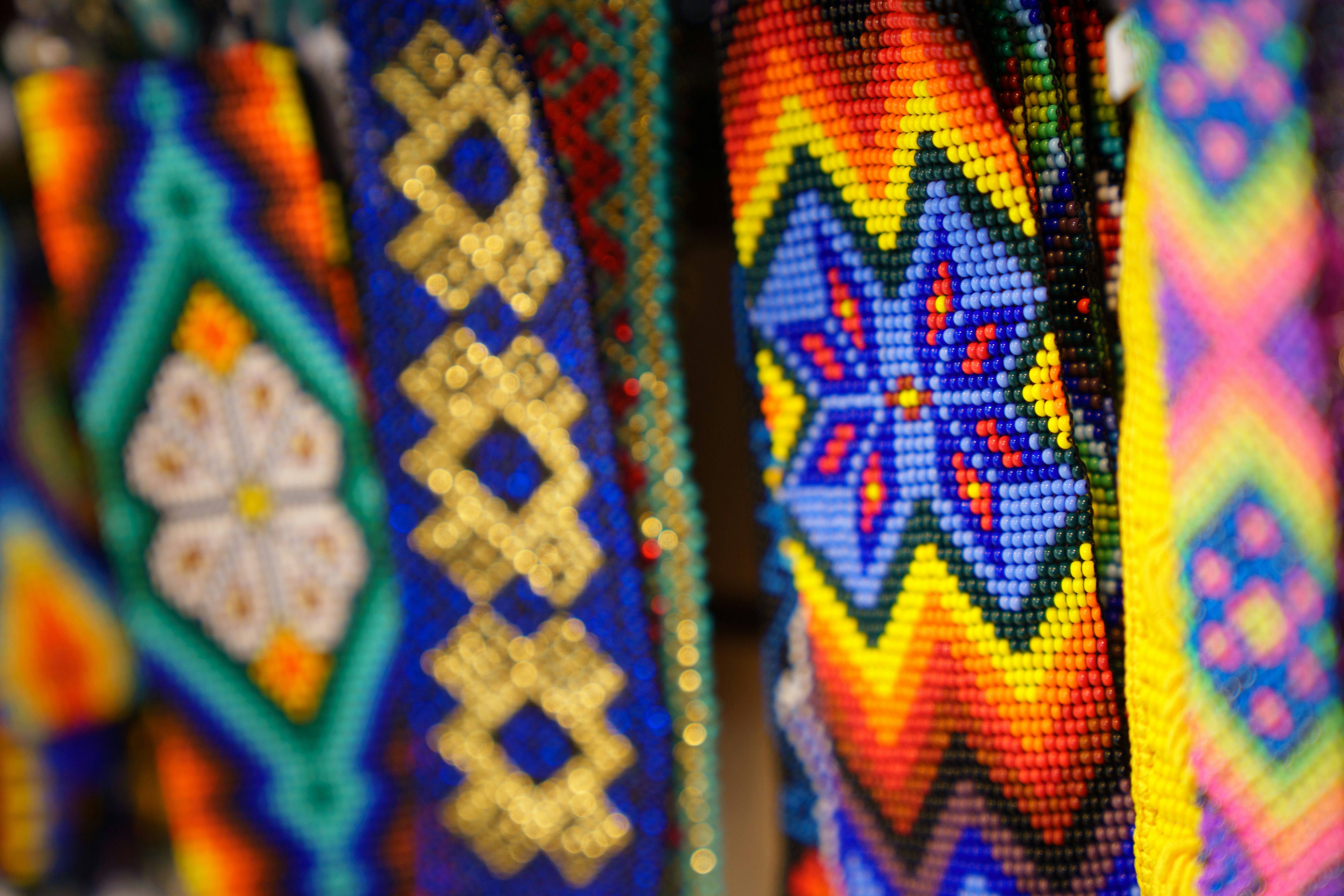
Choosing what to focus on with native american beadwork can feel overwhelming. Are you buying a piece for your wall, learning to stitch yourself, or starting a collection? The decisions around style, materials, authenticity, and technique all depend on your goal. This guide compares the major traditions, materials, and practical choices you will face as a collector, crafter, or enthusiast. We will cut through the romanticized descriptions and focus on what actually matters: understanding the differences so you can make a confident choice.
One of the most common challenges I see is people buying low-quality reproductions or starting a project with the wrong supplies. This happens because the visual beauty of beadwork is distracting. By the end of this article, you will have a workable framework to evaluate beadwork, choose a technique, and avoid the beginner mistakes that waste time and money.

Nation Styles: A Comparison of Major Beadwork Traditions
When you first start looking at native american beadwork, the sheer variety can be confusing. The truth is, there is no single style. Tribal traditions evolved differently based on available materials, cultural influences, and practical needs. If you are deciding between different looks, understanding the source tradition helps.
Plains tribes (Lakota, Cheyenne, Blackfeet, Crow) are perhaps the most recognized. Their beadwork often uses bold geometric patterns with high-contrast colors. You see a lot of red, white, blue, and yellow. The iconic ‘lazy stitch’ (or lane stitch) creates parallel rows of beads. This technique covers large areas like the yokes of dresses, cradleboards, and moccasins. The visual effect is broad and powerful. If you want a bold statement piece, Plains work is usually your best bet.
Northeastern Woodlands tribes (Iroquois, Huron, Ojibwe) developed a very different look. They used raised beading and intricate floral motifs. You see more curved lines, leaves, and vines. The ‘spot stitch’ or ‘overlay stitch’ allows for much tighter, detailed curves. The color palettes are often more muted—moss greens, browns, and blues. This work was often applied to smaller items like pouches, bags, and sashes. If you value precision and nature-inspired flow, Woodlands beadwork is worth looking into.
Southwestern tribes (Navajo, Zuni, Pueblo peoples) present another strong tradition. Zuni work is famous for its dense, intricate needlepoint and petit point. You will see tiny, uniformly sized beads arranged in patterns that are almost mosaic-like. Navajo beadwork often uses larger beads and incorporates symbols like the whirling log or yei figures. The colors are influenced by the desert landscape—turquoise, coral, jet black, and silver. Southwestern pieces often feel more structured and spiritually symbolic.
For a practical buying decision, think about the visual weight you want. Large, colorful Plains pieces command attention in a room. Delicate Woodlands floral work feels more intimate. Southwestern mosaic work is about technical precision. For a crafter, the lazy stitch is beginner-friendly for large areas. Appliqué is better for detail. Your aesthetic preference should drive your choice, but understanding the tradition behind the look adds real depth to your appreciation.

Materials Matter: Glass, Bone, and Shell Beads Compared
The material of the beads themselves fundamentally changes the feel and durability of a piece. For modern buyers and makers, knowing the difference is essential.
Glass seed beads are the most common today. They are uniform in size, consistent in color, and relatively durable. Japanese brands (Miyuki, Toho) are generally superior to Czech or Chinese alternatives—they have straighter holes and more precise shapes. For projects, 11/0 and 8/0 sizes are the most versatile. Glass beads are heavy compared to bone. If you are making earrings or a delicate bracelet, consider lighter glass. For a belt or bag, weight is less of an issue. Beginners looking for reliable materials may want to start with a pack of Miyuki glass seed beads for consistent results.
Bone beads have a warmer, earthier feel. They are lighter than glass and have a slightly porous surface that softens with wear. Historically, bone beads were carved from bison or deer. Modern ones are often from cow bone. They can splinter over time, so they are not ideal for pieces that will take heavy abuse. Bone is excellent for necklaces and earrings where you want a natural, less flashy look.
Shell heishi beads are a Southwestern staple. Heishi means ‘shell’ in the Keres language. These are thin, disc-shaped beads ground from shells like spiny oyster, abalone, or mother of pearl. Real heishi is labor-intensive to make. Fake heishi is sold as plastic or reconstituted stone. Real heishi feels cool to the touch, has tiny variations in thickness, and costs more. It is beautiful for necklaces but can be fragile. If you are buying shell heishi, look for a seller who identifies the shell type and discusses the handmade origin.
A practical tip: for your first few projects, buy a small pack of quality glass seed beads. You will get consistent results and avoid the frustration of dealing with poorly made beads.
Symbolism in Beadwork: What Patterns Really Mean
Beadwork patterns are not just decorations. They carry meaning. But you need to be cautious: assuming every symbol has one universal meaning is a fast route to misunderstanding.
The thunderbird is a common motif across many Plains tribes. It generally represents power, protection, and the spirit of the sky. You will see it on war shirts and ceremonial pieces. The morning star design, often seen in Lakota beadwork, symbolizes hope, guidance, and the renewal of life. The central diamond shape with four points represents the star in the east.
Geometric patterns also hold meaning. Tipi motifs (triangles or a series of triangles) represent the home and shelter. Mountain patterns (a series of zigzags) represent the journey or the landscape. Water bug or dragonfly designs in Woodlands beadwork can relate to speed and transformation.
Here is the catch: the same shape can mean different things in different tribes. A four-pointed star in Crow beadwork might represent a star or a compass. In Navajo work, it could be a Yei spirit. The blue color in one tradition symbolizes the sky; in another, it represents the depths of the water.
For a buyer, do not buy a piece just because you think you know the symbol. Ask the artist or dealer what the pattern means in their tradition. If they cannot explain, be skeptical. For a maker, do not copy sacred or restricted designs. It is respectful to stick with geometric patterns that are widely used and understood. Generic floral or abstract work is safe for beginners. Understand that true symbolic work comes from cultural knowledge, not just a pattern book.
Authentic vs. Reproduced: What to Look For
This is the biggest minefield for collectors. There is a massive gap between good quality authentic beadwork and mass-produced items from overseas factories.
Signs of authentic beadwork: Look at the stitching. The beads should be uniform in size, but the tension should be even. Loose beads or puckered fabric are red flags. Authentic pieces often use sinew or high-quality bonded nylon thread (like Nymo). The backing material is usually brain-tanned buckskin, smoked hide, or high-quality wool trade cloth. Factory-made pieces use thin cotton, polyester felt, or poor quality cloth that will rot.
Check the edges. Hand-sewn beadwork usually has clean, finished edges. Factory pieces often have raw, glued, or poorly turned edges. Also, examine the bead colors. Mass-produced items use cheap, shiny acrylic beads. Authentic pieces use glass or semi-precious stones like heishi or turquoise.
Price ranges: A small, simple pair of beaded earrings from a known artist can cost $30–$80. A fully beaded bag from a recognized artisan can be $200–$800. A classic Lakota dress with extensive beadwork can run several thousand dollars. If you see a ‘Native American’ beaded bolo tie for $15 at a gas station, it is almost certainly a factory reproduction from China or India. Do not buy it as an investment.
Where to buy: The best places are tribal arts shows, reputable dealers like those at an Indian Market (Santa Fe, for example), and established auction houses. For examining stitch quality, a jeweler’s loupe is invaluable. A reference book on beadwork identification is also a small investment that pays for itself by helping you spot fakes.
Common mistake: assuming ‘made in the USA’ on a tag is enough. It is not. Check for a specific tribal affiliation or artist name. A reputable seller will happily tell you who made it and what tribe.
Getting Started: Loom Beading vs. Appliqué vs. Peyote Stitch
If you want to learn native american beadwork, the technique you choose dictates your tools, time, and frustration level. Here is a realistic breakdown.
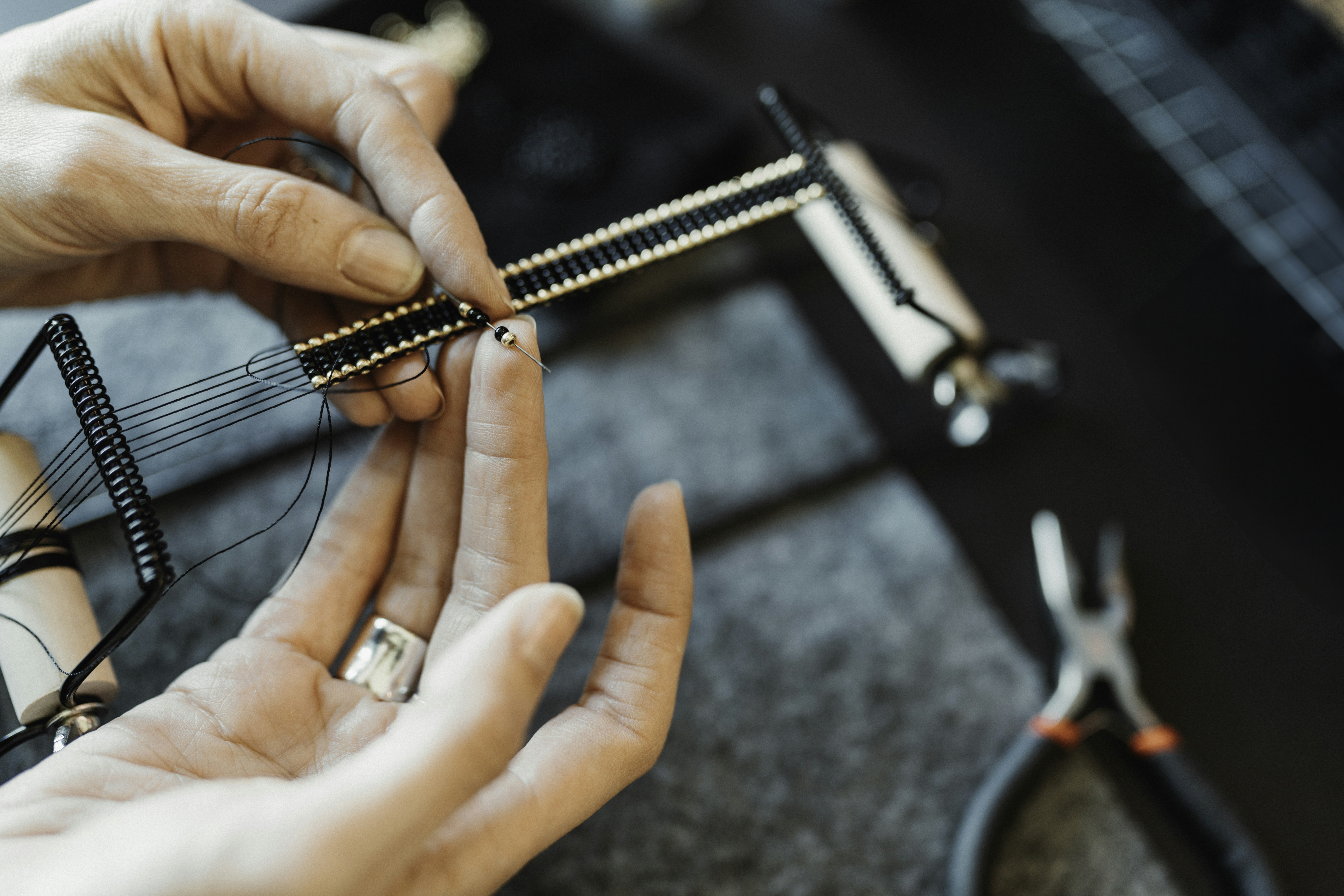
Loom beading is great for beginners who want to make flat, uniform pieces like belts, watchbands, or simple pictures. You string warp threads on a loom, then weave beads in rows. The key skill is even tension. A simple beginner bead loom kit costs under $20. The learning curve is gentle. Within a few hours, you can make a simple bracelet. The downside is that loom work is slow and you are limited to straight lines or gentle curves.
Appliqué (or overlay stitch) is the method used for the beautiful curved floral patterns you see on Woodlands work. You stitch beads directly onto a fabric backing. You use two needles: one carries the beads, the other anchors them. It is more difficult than loom work but allows for much more complex designs. Appliqué takes patience. A small medallion might take 10–20 hours. This technique is best if you want to make detailed pieces like medallions, barrettes, or bags.
Peyote stitch is a bead-weaving technique done in your hand, not on a loom. You build rows of beads by adding one at a time. It is excellent for making tube shapes, jewelry, and sculptural pieces. The learning curve is a bit steeper. You need to learn to read a pattern and maintain consistent tension. But once you get it, peyote stitch is incredibly versatile. Uses include bracelets, earrings, and small amulet bags.
For most beginners, I recommend starting with loom beading. It teaches you the basics of tension and pattern reading without the complexity of multiple needles. A good starter kit—with beads, thread, and instructions—is a practical way to begin.

Essential Tools and Supplies for Beadwork
You cannot do quality work without the right tools. Here is what you actually need, with recommendations based on experience.
Needles: Use beading needles. They are extremely thin and flexible. Sizes 10 and 12 are standard for seed beads. The John James brand is reliable. They come in packs and break eventually, so buy a couple packs.
Thread: For loom work and appliqué, Nymo is the standard. It has a bit of stretch, which helps with tension. For peyote stitch and projects requiring more strength (like bracelets), use Fireline. It is a braided fishing line that is very strong and does not stretch. Avoid cheap cotton thread—it rots.
Thread conditioner: Beeswax or Thread Heaven. This prevents tangling and twisting. It is cheap and saves huge frustration. Definitely get some.
Bead mat: A non-slip bead mat keeps beads from rolling off your table. It is a small item, but you will use it every time.
Storage: Small plastic containers or bead storage boxes. Beads are tiny and mix easily. Keeping them sorted saves time. A bead storage organizer is a good start.
Scissors: Small, sharp embroidery scissors. Do not use your sewing scissors on beading thread—it dulls them.
Quality tools last. Spend $40 total for a solid starter setup, and you will not need to replace anything for years. Cheap needles bend and break. Cheap thread tangles. Do not cut corners here.
Common Mistakes Beginners Make (and How to Avoid Them)
Everyone makes these. The smart beader learns from others instead of their own frustration.
Mistake 1: Using wrong thread tension. Too loose and your beads sag. Too tight and the fabric puckers or the beads break. Fix: practice on a small swatch first. Aim for the beads to sit snugly against each other without gap, but not so tight that they pull the backing.
Mistake 2: Not planning the pattern. Jumping into a project without a clear pattern is the fastest way to waste hours. Fix: use graph paper or free online software for loom patterns. Lay out the design on paper first. For appliqué, trace your design onto the backing before starting.
Mistake 3: Buying cheap, mixed-size beads. Cheap beads from the craft store have huge size variation. Your pattern will look lumpy. Fix: spend a few dollars more on Miyuki or Toho beads. The uniformity is worth it.
Mistake 4: Not using a thread conditioner. Tangling costs time and breaks needles. Fix: run your thread through beeswax or Thread Heaven before you string beads. It takes 10 seconds and saves half an hour.
Mistake 5: Not knotting securely. If a bead strand breaks, the whole piece can fall apart. Fix: weave back through several beads and make a surgeon’s knot. Use a drop of clear nail polish or glue on the knot for insurance.
Mistake 6: Choosing the wrong backing material. Felt is too stretchy. Cotton will shift. Use brain-tanned buckskin or a stiff wool felt. A sturdy backing prevents puckering.
These are small choices that make a huge difference in the final result.
Caring for Beadwork: Storage, Cleaning, and Repair
Whether you own a collectible piece or made something yourself, care is essential.
Storage: The enemy is light, moisture, and heat. UV light fades bead colors, especially glass and shell. Do not display beadwork in direct sunlight. Store pieces in a dark, dry place. Acid-free boxes prevent thread and hide from rotting. Padded trays help prevent damage if you store multiple pieces.
Cleaning glass beadwork: The safest method is a soft damp cloth. For stubborn dirt, use a tiny amount of mild soap (like dish soap) on a damp cloth. Rinse by wiping with a clean damp cloth. Do not soak beadwork. Water can swell the hide or cause thread to rot. For sturdy, densely stitched pieces, some people use a brief ultrasonic cleaner but this is risky if the piece has loose beads or delicate materials.
Repair: If a thread breaks, you can often re-thread the loose beads. Use a matching thread color and weave it back through. For hide pieces, avoid stitching through the same hole repeatedly as it weakens the material. For valuable collectibles, do not attempt repair yourself—take it to a professional conservator who specializes in ethnographic materials.
Good storage alone will keep your beadwork in great shape for decades. Poor storage can ruin it in a year.
How to Choose Beadwork as a Gift or Collectible
Making a good choice means matching the piece to the person and the purpose.
Purpose: If it is a gift for display, look for a well-made medallion, a framed piece, or a fully beaded bag. If it is for wearable use (necklace, earrings, bracelet), prioritize durability. Check for secure closures and good thread. Earrings should be lightweight—a pair of heavy glass bead earrings will pull on the ears.
Budget: Under $100, you can find nice small pieces like pins, barrettes, or simple earrings from emerging artists. $100–$300 gets you a quality bag or a small framed piece from a recognized maker. Over $300, you are in serious collectible territory—works by known artists or antique pieces.
Authentication: Always ask for the artist’s name and tribe. A true artist will sign their work or have a card. If you are buying online, ask for maker information. If they cannot provide it, assume it is a reproduction.
Recipient’s taste: Match the style to their aesthetic. Bold colors and geometric patterns for someone who likes statement pieces. Floral or nature motifs for a more delicate look. Southwestern turquoise and shell for a desert lover.
Where to buy: Buying direct from the artist at a market or through a gallery is best. You get the story and the quality. Online, platforms like Etsy are mixed—look for shops with clear tribal affiliation and positive reviews. Avoid pawn shops and tourist shops unless you really know your stuff.
A well-chosen piece of beadwork is a meaningful gift. A poorly chosen one is just a decoration.
Final Thoughts: Choosing the Right Path in Beadwork
The best choice in native american beadwork comes down to your goal. If you are a collector, prioritize authenticity, maker identity, and condition. Your money is safest in well-documented pieces from known traditions. If you are a crafter, start with loom beading using quality beads. The investment in good materials and tools pays off in results. If you are buying a gift, think about the recipient’s style and where it will be used.
Remember the common pitfalls: buying reproductions as investment pieces, starting a project without a pattern, and neglecting storage. Avoid those, and you will have a much more rewarding experience. Take your time, ask questions, and respect the cultural weight of what you are creating or collecting. The beauty of beadwork speaks for itself, but informed decisions make it last.